Blog Archives

Becoming a Master Gardener

As a child of 10 in Indiana, my Dad taught me how to dig up a small backyard garden and plant some tomatoes and corn.  There was nothing he liked better than to sink his false teeth into the first red, ripe, juicy tomato of the season and munch away on fresh corn on the cob.   In Indiana you poked the seeds in the ground, added water and they grew.  It was easy

Then I moved to New Mexico.  Did you know that tomatoes do not like the soil or the water or the heat of Albuquerque?  They looked pathetic.  I had never really studied gardening, so I really did not understand what the heck was going on, but I did start reading everything I could.

In the course of my investigations I discovered that the Department of Agriculture (DOA) doesn’t just focus on farms and ranches, they also have a program that is aimed at backyard gardening in urban, suburban or rural environments.  They call it the Master Gardener (MG) program and it is offered through their County Extension offices in each state.

Not every county offers the program , but in those that do the county extension agent in association with a group of members sets up classes covering a wide range of information related to gardening.   In Albuquerque the classes are held for 10 weeks, 4 hours at a stretch, on Tuesday mornings beginning in January, when there is little one can do in the garden.

Interns learn about general topics such as Basic Soil Structure, and topics focused on the local area such as The Soils of Albuquerque.  (This is where I learned that what I was trying to grow my tomatoes in was in actuality decomposed granite).  The classes are taught by experts in each field – usually professors from your state’s agricultural university, or the county agents themselves.

Other topics included Plant Pathology, Entomology, Urban Forestry, Microclimates, and Pesticide Safety.  Once you get through those, there are some classes that discuss the basics of different kinds of plants, highlighting the ones that work well in the local area.  Roses love New Mexico, so do certain kinds of trees and shrubs.   We are taught what are the predominate weeds, and which weeds can become vectors for propagating plant diseases.

To create a good vegetable garden, including tomatoes and corn, you have to compost, compost, compost!  Regardless of what the seed packages say, tomatoes and several other veggies prefer partial shade to full sun, though the corn doesn’t care as long as it has water and compost.  The Albuquerque garden is about 5,000 feet closer to the sun than in Indiana.  The solar radiation is stronger here, so a little protection is appreciated by plants (and people!).
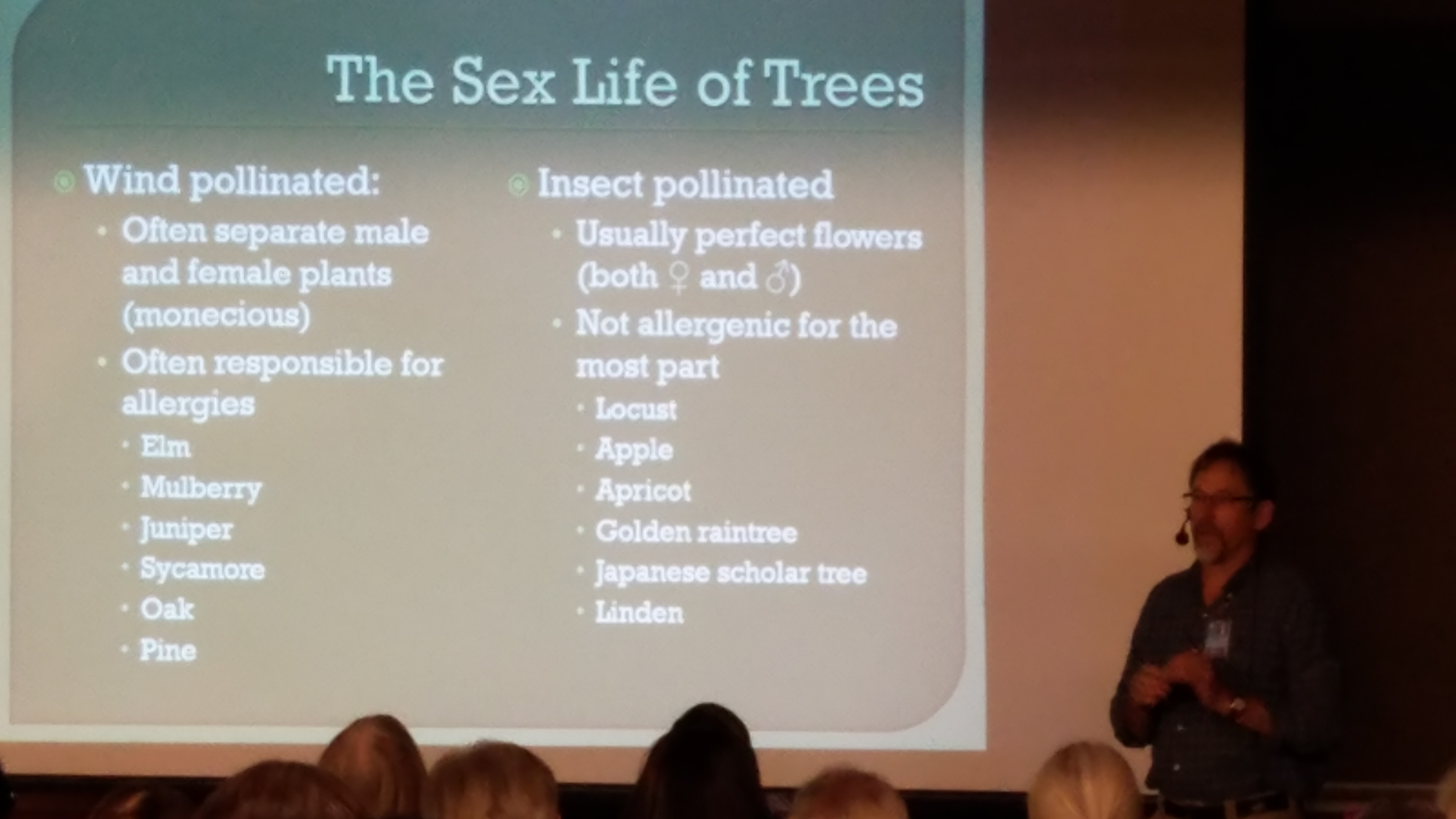
Fruit and nuts also need some extra help. Pecans, raspberries and blackberries love the New Mexico soils, but blueberries are and will always be an exercise in frustration.  Apples, Pears, Peaches, etc will grow here, but are happier in the northern mountains where they do not bloom too early.


There are even classes in Turf selection and management for those who want a spot of grass in the yard.  In the Xeriscape class we learn that you can have a lovely garden, you just need to use good judgement when it comes to your plant selections, and include some water saving options such as drip irrigation.

The program does not end with the classes.  To become an official Master Gardener you have to volunteer your time helping others in your area who are experiencing difficulties in their yards.  Each county across the nation has different requirements, but here in Bernalillo County (Albuquerque), we are required to spend at least 20 hours a year manning the garden hotlines, plus another 20 hours doing other approved volunteer work.

The Albuquerque Master Gardeners set up tables at local libraries and farmer’s markets, teach kids in the classrooms and through creating school gardens, work with ARCA to make lovely gardens in their group homes, and set up exhibits at the State Fair.  Some of them go to people’s houses to offer advice in landscaping.

The county extension agent uses the MG program as a filter.  Most of the agents are overwhelmed with calls, especially in larger communities.  Any questions that the Master Gardeners cannot answer or resolve are put through to the county agent.

The hotline and other volunteer duties truly expand your understanding of gardening, and you can end up fielding some really strange questions.  Do you know what is the most common problem in gardens in Albuquerque?  Overwatering.  People think that since it is a high desert climate, that a little water may be good, but more is better.  As a result, a lot of them drown their new planted trees.

Some people will bring tree limbs or leaves into the office itself to ask what is wrong with their plant.  One young man brought in one blade of grass and asked me what variety it was.  Yeah Right.  Fortunately he also brought some digital photos of the grass and the area it was planted in, so I could diagnose why he was having problems growing turf.

At the end of the season, after all the volunteer hours have been fulfilled, the intern earns the right to be called a Master Gardener.  Here in Albuquerque they are given a certificate, a shirt and a nice plastic Master Gardener nametag, which they are encouraged to wear at all MG events.

To keep the title, MG’s are required to volunteer at least 40 hours per year and take 6 of the classes that are held annually.  Each person must spend 20 hours on the hotline, which is manned from March through September and is the most important aspect of the program.

To find out if you have access to a Master Gardener program in your area, contact your county agricultural extention offices.  You could also Google “Master Gardeners” and your state.  Our local website is www.abqmastergardeners.org.


Suburban Homesteading

Greetings fellow suburbanites and backyard farmers!

Have you ever picked up a copy of a magazine like “Countryside” or “Mother Earth News” and wished you were set up to be totally self sufficient?  Being able to do for ourselves rather than always being dependant on society is a fundamental human need.  And at the same time many of us enjoy the convenience and diversity of experiences living near to towns and cities can offer.  Some need to be close to medical facilities, some have jobs in town and want to reduce their impact on the planet by using alternate forms of transportation, or just not have to drive a great distance.

Whatever your reason for staying relatively close to larger communities, you may be asking how do we become as self-sustaining as possible?  How can we create a healthy non-polluting personal environment?  How can we have the best of all worlds?

This website focuses on these questions and you will see many articles that may look like they came from a rural community related to construction, food preservation, organic gardening and much more.  My personal observations have been gathered over the years from living in the high desert, and since I am over 60 with the aches and pains earned honestly, I also have some tips and advice for older suburban homesteaders.

To Start With…

How much do you know about your property?  Or, if you are looking to buy a home what should you seek in your quest for self-sustainability?  Things you should assess include:

Property – Is there enough room for a garden?  Is it fenced?  Are there sheds or other structures outside? Is there a well?

Government restrictions –   Be sure you understand what you are allowed and not allowed to do in your community.  For instance, many counties in New Mexico and Colorado do not allow you to catch and use the rainwater coming off of your own roof!     Albuquerque is in Bernalillo County.  Although my half acre has an Albuquerque address, it is outside the city limits.  This means I abide by the laws of Bernalillo County without the added city regulations.  My property runs along an acequia (agricultural water ditch) only a quarter mile from the Rio Grande.  Although the house is on city water, I have a grandfathered well only 18 feet deep for gardening water.

Income Potential – What are the zoning restrictions in the neighborhood?  Most residential neighborhoods can house small businesses as long as there is no “foot” traffic.  The county and/or town government may have restrictions on the types of things people are allowed to manufacture on the property.

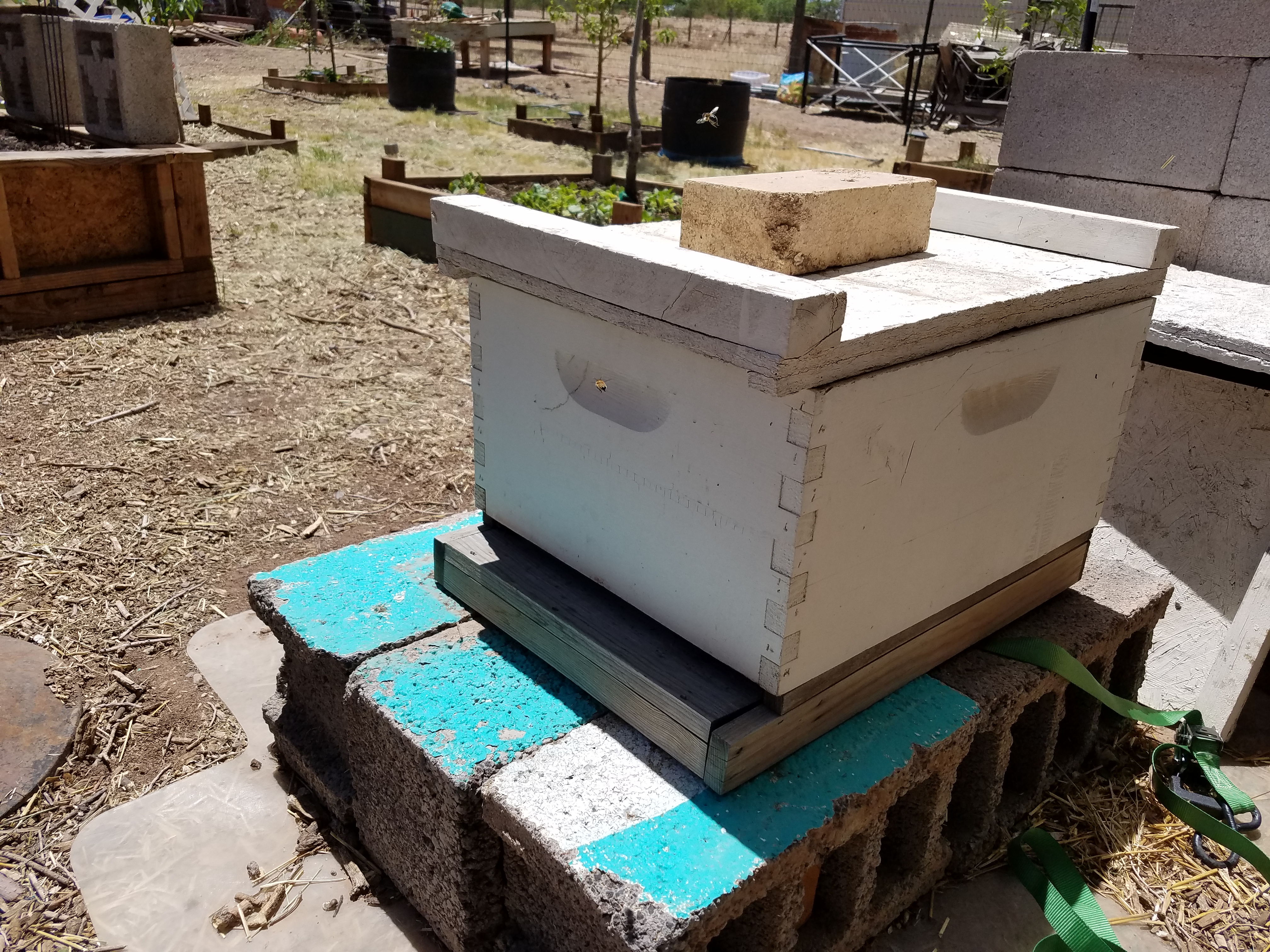
Critters – Does your town or county let you have backyard livestock?  Horses?  chickens?  Bees?  What is the limit on how many you can keep?

Transportation and Roads – Is your street kept up by the county or do you have to pay for private road maintenance?  Is there nearby access to buses, trams or railways?

Community – Is the area you want to live in friendly?  Are there known “drug houses” in the area?  Is there a neighborhood watch?

Apartments – If you need to live in an apartment, you may want to choose a lower floor with the balcony side facing south.  This offers more options for growing plants.  Although the upper floors may have better views, having that floor above you means your heating/cooling costs will be lower.

Trash – What’s the story for your trash – do you have to use a contractor specified by the county or are there options?  Is there a recycle program in the area?

Houses – What options does your house have for heating/cooling if the grid is down? Does the house have adequate pantry space to store food for a lengthy period of time?  Emergency supplies?  Is the house in an area that is subject to wildfire or floods?  If in the mountains is there space between the house and any fir trees in case of forest fires?

HOA’s – Most Home Owner’s Associations are nasty little pieces of work.  They are more concerned with everyone keeping their places neat, clean and exactly alike than with allowing any form of individuality.   One HOA in Plainfield, Indiana has nice big houses and lawns and they dictate what color christmas lights the residents are allowed to put up each year!  Read their rules carefully if you are wanting to buy in any area with an HOA.   Will they allow a vegetable garden at all?  Can you plant them in the front yard?  How about solar panels?  Wind? Can you set out a clothesline?

Whether you already have property or are looking for a place it is good to know the issues – what can you do and what might get you in trouble!


Intro to Solar Cooking

 When I was a kid, every summer the TV news folks would choose a very hot day to go downtown, spread aluminum foil on the County Courthouse steps and crack an egg onto it. They then proceeded to tell jokes about how hot it was. I don’t ever remember the egg getting cooked – but the image stayed with me.
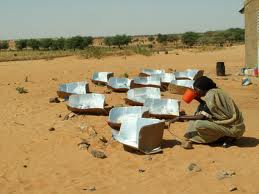
35 years later I saw my first Solar Oven. It was sitting on the ground and contained a nicely browning turkey – in February. Solar Cookers have made a splash all over the world in the last 10 years. In many countries of Africa, there are villages that have little in the way of firewood for cooking, Sun Cookers, International is a non-profit group that raises money to bring Sun Ovens made from foil covered cardboard with oven roasting bags to these areas. A pot of rice and beans placed into this arrangement will cook food for the family without the women having to spend hours searching for a few small sticks of firewood or dried dung.

There is a town just outside Mexico City wherein the women’s association has built a large solar oven. Panadaria Solaria is the name of their bakery, which supplies most of the village’s bread.

A simple solar oven is made from lining a shoebox with aluminum. Paint the outside of a quart canning jar Black. You can put hotdogs or water or anything that needs warmed inside the jar. Place the jar inside the box and tilt it towards the sun. On a sunny day it should only take 15 to 20 minutes for it to be ready.

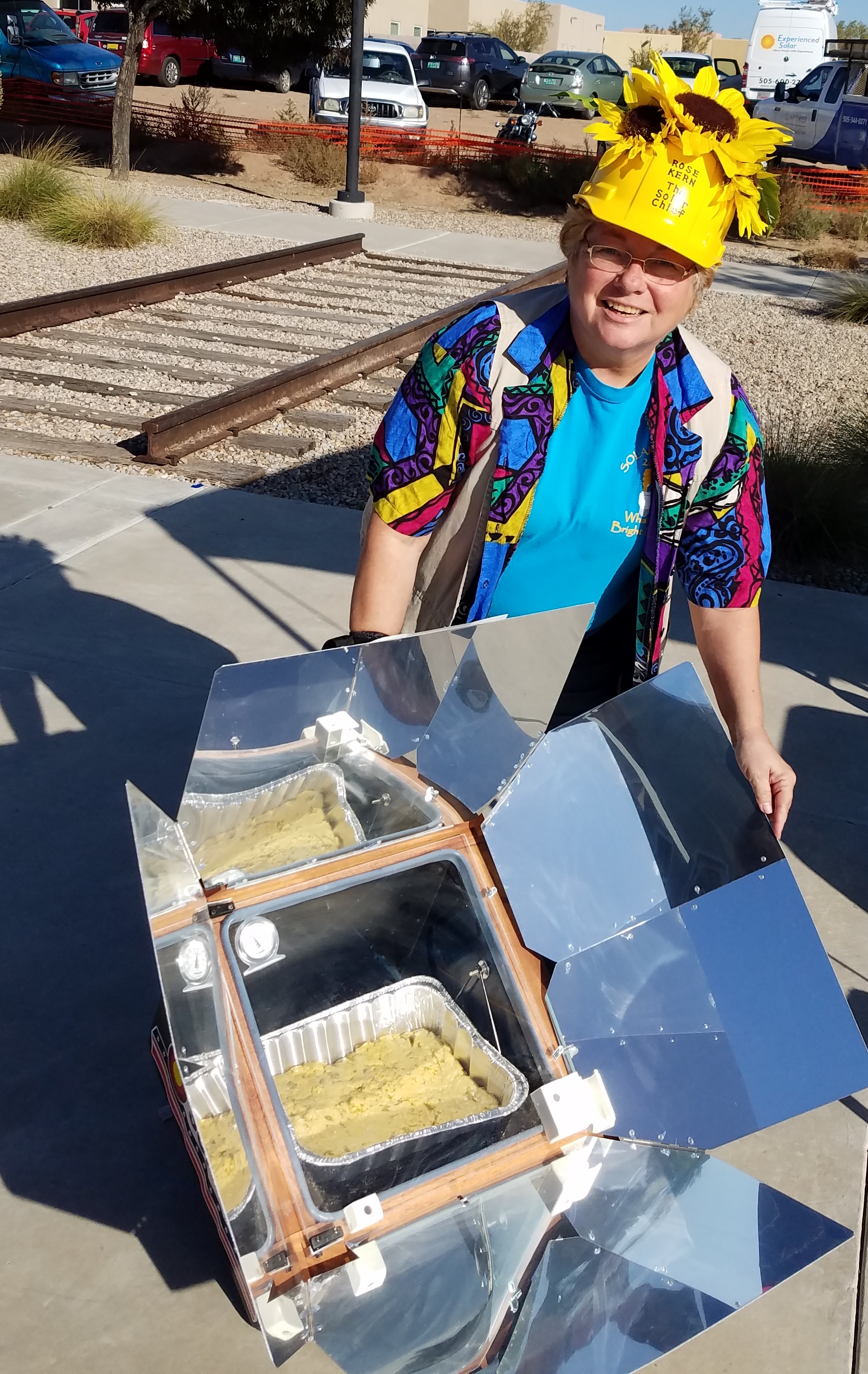
There are many plans for building oven sized solar cookers from cardboard or wood, and there are several kinds of solar cookers that are considered to be serious appliances. The Global Sun Oven is one such appliance. It has petal-like reflectors and tempered glass doors. It can reach 425 degrees in summer, and even in winter will cook the evening meal – as long as there is sun! The beauty of this one is that it folds up quickly, weighs only 21 pounds and is easily transportable. It can be used during camping when the forest service won’t even allow camp stoves. It contains a temperature gauge and a suspended platform that keeps food upright even when the box is tilted to gather maximum sunlight.

There are also several parabolic cookers – curved surfaces that reflect light toward a pot suspended at the point where the light is focused. These can achieve higher temperature, and are very good for frying. They usually are not as easily portable as the box cookers, but do very well at boiling the morning coffee!

 Although most of us in the United States don’t have the problems faced by the women in Africa, there are several advantages in using Solar Cookers in the sunny Southwest. It reduces the amount of gas or electricity we use with regular stoves – lowering the utility bill. It reduces the amount of heat we generate when using conventional stoves indoors – so our air conditioning does not have to blow out the heat – again reducing the utility bills.
There are subtle and important differences between a solar oven and the electric or gas ovens we find in most kitchens. One involves the temperature fluctuation during cooking. This is especially important at lower temperatures.

There are many ways to build homemade solar cookers and I have listed some websites where you can get that information below along with locations where you can buy the professionally built solar cookers. Most of these books are focused on the creation and promotion of solar cooking. They contain recipes which are usually simple, though tasty, in nature.

My book,  “The Solar Chef” is filled with time tested recipes and tips for cooking with sunlight, many of them are examples of true gourmet cooking. From soups to bread, solar cooking is a treat and a joy. So turn the pages and bask in the Sun!
In this cookbook at the top of each recipe near its name you will one or more of the abbreviations listed below which describes the kind of sky condition necessary to cook the recipe. For instance: (SKC) means clear skies and full sun only (PC) means you can cook in either clear skies or partially cloudy skies can have some high wispy clouds or a few mid level fluffy cumulous clouds.

Over time you will acquire a feeling for when the cloud cover is simply too dense to cook in. Just remember, the more clouds the slower the cook time. This may not affect the soups and all day dishes very much, but the breads, eggs, and desserts frequently require hotter temperatures.

One thing that I have noticed is that clear skies at or near sea level is a very different thing from clear skies in the higher altitudes of New Mexico, Colorado and Arizona. That extra 5000 to 7000 feet of atmosphere can diminish the ovens temperature somewhat, though the people in Wisconsin will tell you that they can still make some great solar foods!

So Just Have Fun! (and if you screw up a couple of times at first, laugh and forgive yourself)


Garden Wit and Wisdom

The Mad Gardener

by Mistress Rose

My husband thinks I am insane and I can’t say as I blame him.  This morning I was wandering amongst the pumpkins and discovered – Horrors!  Squash bugs!  Lots of them.

Of course you never have ONE squash bug, they always appear in a crowd.  Half of them are climbing on the backs of the other half making MORE squash bugs. I’d guess they’re the horniest critters in the insect world.  Even their young are called nymphs!

Of course, since they live in a constant state of post-coital euphoria, they don’t move very fast, so you can just catch them by hand and dump them in a bucket of soapy water (Here, you oversexed cucurbit monster – take a cold bath!)  But when it is already hot outside that’s a lot of extra work.

My methods are a lot quicker.  I duck inside, grab a 100 foot extension cord and a shopvac.  I flip the switch and WHOOSH, bugs gone.  Of course I do careful surgery on egg laden leaves in the process.

My favorite piece of garden equipment is a chipper/shredder.  When I am angry, upset, or just frustrated my therapy involves ripping weeds out of the ground or trimming bushes and branches.  Then the chipper is rolled out and I visualize whatever the heck is bothering me as I thrust the mounds of innocent vegetation into the hopper.  The angry roar of the motor and whirling blades compliments my emotional turmoil and the tiny fragments of torn organic matter spewing from the side release my angst.

In the fall I hook up my small utility trailer to my Suburu. Stealthily I cruise the quiet streets of middle class suburbia until – There!  I see at least 8 bags of what appears to be leaves set on the sidewalk waiting for Tuesday’s trash pickup.  I pull up to the curb and do a perfunctory walk up to the front door.  I do ring the bell and ask permission to take the bags, but if no one is home… well, heck nobody sets trash bags on the street unless they want to get rid of them…right?

Eight bags here, 12 bags there…by the time I am done the little trailer is crammed five feet high with leaves and I am on my way home to my chipper and my compost heap.  I am the Queen of leaf thiefs and as added value I stop off at one, or two, or maybe all the Starbucks in the northeast quadrant of town and snarf all the little silver bags full of used coffee grounds left out for area gardeners.

I spend hours watering with a hose in my hand rather than hooking up a sprinkler just so I can walk through the garden and listen to the plants sigh with pleasure as the droplets caress their leaves.  There is a wonderfully pungent almost burnt aroma unique to dry hot soil that is released by the touch of water.  Recently I discovered that smell has a name…petrichor.

At the end of a good gardening day my hands are dirty, my nails are broken and I am completely relaxed and content with the world.  Insane is good.


A Practical Environmentalist

“What are you doing?” I asked my daughter. After living with me for 13 years you’d think that she would automatically toss her aluminum soda can into the recycle bin. No, it was airborne and headed into the trash when the flash of sunlight on metal caught my eye.

Rolling her eyes she fished the can out and put it in the right place.

The Right Place. Sometimes I catch myself thinking about how much has changed – not just technology or building developments, but mindsets.   As I child I would not have thought about where I threw any can. As a child there were no soda cans, just bottles. Even then my parents did not purchase sodas for their kids, we drank water, milk or kool-aid. Hawaiian Punch was a treat served only on holidays.

In my parent’s youth everything was used, re-used and then torn apart and used some other way before it was ever thrown away. That was before advancements in technology turned us into a “throw away” society. Plastic was one of the biggest culprits. Suddenly you could make anything so cheaply that you didn’t have to bother to clean it up and use it again – just throw it away! Who cares – it’s only worth about a nickel and what’s a nickel?

About twenty years ago now it suddenly dawned on people here in the good ol’ USA that just maybe all that waste was bad for us. By us I mean not just the country as a whole but for towns and communities that don’t have any place to bury their trash, some places have to pay to have their garbage shipped to other places with smaller populations and more land.

Of course, at the same time we discovered that splitting the atom may have created huge new energy resources, but the process creates more garbage of a kind that can make people sick. Then there are the fools who want to live in the southwestern desert, but believe in their souls that they have the right to use as much water as they want so they can have a lush green yard.

Technology has spoiled us on a number of levels. You go to a grocery store these days and you can get any kind of fruit or vegetable at any time of year. You want fresh tomatoes in January, corn on the cob in April, young tender zucchini anytime…why not? So what if it takes a jumbo jet out of Hawaii plus a huge tractor trailer driving 1,072 miles to bring you fresh pineapple in Amarillo – it’s only a couple bucks at the store. Of course from picking to purchase it costs the world 9504 gallons of Jet fuel, and at least 180 gallons of diesel. That’s a lot of stinky stuff to dump into the air.

Like a lot of people I have absorbed all the statistics and come to the realization that we as individuals really do need to change how we approach everything from what food gathering options we have to how we dispose of waste. What bugs me is that the minute you mention that you save aluminum cans or recycle computer paper people automatically equate you with the wild eyed frenetic extremists who sit in trees and scream obscenities at passing loggers.

Applause to the radicals who bring attention to a problem – it is not how I prefer to live. They may draw attention to a situation, but it is the average citizen living in a community who will slowly and steadily change it. People need to look around and see what they personally can do in daily life to make a difference.

I am an inhabitant of the high desert regions. My home has just under an acre inside a small town. The community is large enough to have choices of waste disposal companies and I prefer to use one that recycles. Even so, before I throw something away I consider whether or not it can be used in some other fashion. I do eat out on occasion and I use the containers they provide for other things. Did you know that the small containers Kentucky Fried Chicken use for single servings of cole slaw make great butter dishes?

In my handbag you can usually find a small plastic food storage box-the kind you can re-use. If I know the restaurant’s leftover containers are Styrofoam, I pull my box out and use it instead. The water in my community is tasty. I run it through a filter and drink it rather than buying a lot of plastic water bottles. That does not mean I shun any use of the plastic ones, there are times when that is preferable to other options.

My husband and I prefer to buy locally, but if price differences are dramatically different we don’t have any prejudices about bopping over to Wal-Mart. My own organic garden and the local Farmer’s Market provide most of my vegetables, and I like to can and dehydrate my produce. The garden is on a drip system and I employ heavy mulching, so my water usage is much smaller than my neighbor with the lawn.

The most amazingly short sighted waste is in the area of clothing. People keep closets full of things they don’t wear, or if they’ve worn it once or torn it slightly they may throw it away! If something is torn, I pull out needle and thread and stitch it up – then wear it again! Twice a year I take inventory of what I have. If I haven’t worn it because I got too fat or don’t like it anymore I give it to charity. You can get some really great clothes at thrift stores – from those people who wore it once.

I own a total of six pairs of boots/shoes. Sass shoes has a very practical black leather shoe I can wear all day long in the office and be comfortable. They are expensive, but great. Once a year I buy a new pair. The old pair becomes my gardening shoes. The others are a seldom used pair of brown loafers, a pair of black pumps going on 9 years old, a set of tennis shoes, and some winter boots. There is a pair of cowboy boots somewhere in the back of the closet that I haven’t seen since 2003.

Creating a healthier environment starts in the mind. Look around and see what you can do in your own home to make a difference. Start small, but do it repeatedly until it becomes a habit.

Years later my daughter and I were at a friend’s house when her boyfriend chucked an aluminum can into the trash. We both flinched.